Improve the Situation of Persons with Deaf-Blindness in Rwanda
Persons with deaf-blindness in Rwanda face unique challenges in communication, mobility, access to information, and social inclusion. This project aims to address these challenges and enhance the well-being and independence of persons with deaf-blindness through a multifaceted approach.
This project, supported by MyRight through the Partnership with FSDB, started in 2011 through the coalition of three organizations of persons with disabilities: the Rwanda Union of the Blind (RUB), Rwanda National Union of the Deaf (RNUD), and Rwanda National Association of Deaf Women (RNADW). In their work, they encountered persons with the dual disability of Deafness and Blindness, which led to significant difficulties in providing services.
Since Deafblindness is a rare disability, individuals live far from each other and are scattered across the country, so few people have any idea how to address their concerns. Through this project, 167 persons with Deaf-Blindness were identified in four districts; currently, there are more than 350 persons with Deaf-Blindness in five districts out of thirty in Rwanda. The majority (60%) are children of school age, while 40% are adults.
The project grew and, in 2018, became the Organization of Persons with Deaf-Blindness (Rwanda Organization of Persons with Deaf-Blindness).
Project Goals
- Improve communication and language access for persons with deaf-blindness.
- Enhance mobility and access to transportation for persons with deaf-blindness.
- Increase access to information, education, and employment opportunities.
- Promote social inclusion and community participation for persons with deaf-blindness.
- Empower individuals with deaf-blindness to advocate for their rights and needs.
Project Components
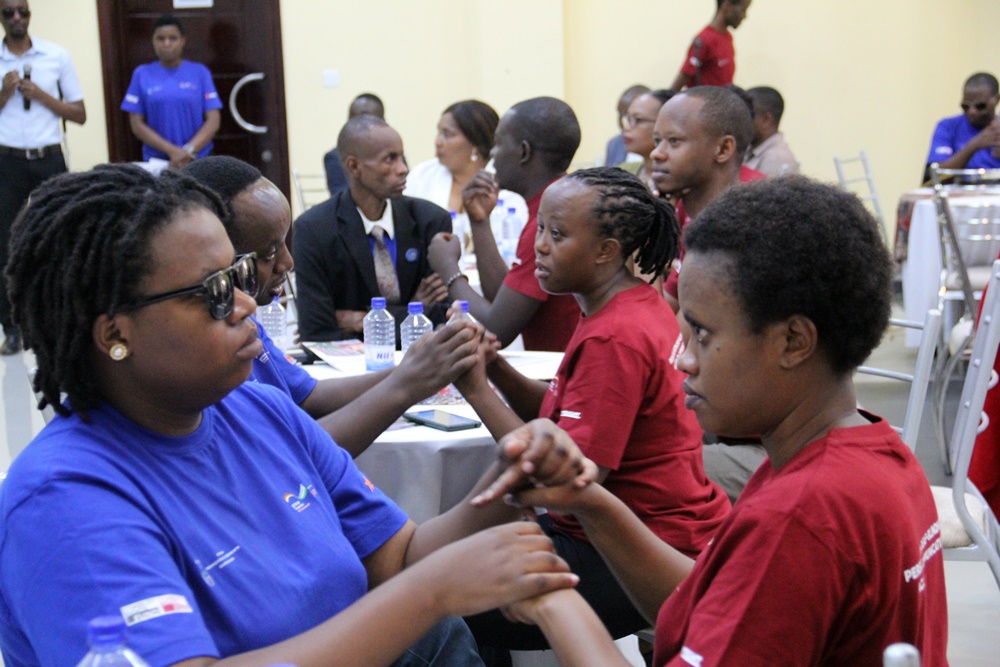
- Communication and Language Access: ROPDB is establishing specialized communication services such as tactile sign language interpretation, braille transcription, and tactile graphics. Training and resources are provided to families, caregivers, and service providers on effective communication strategies, and accessible communication tools tailored to the needs of persons with deaf-blindness are being developed and disseminated.
- Mobility and Transportation: The ROPDB conducts assessments to identify individual mobility needs and preferences, provides orientation and mobility training to improve independent travel skills, and collaborates with transportation providers to ensure accessibility for persons with deaf-blindness.
- Access to Information, Education, and Employment: The organization advocates for the Government of Rwanda to establish education for persons with Deafblindness, creates accessible educational materials, collaborates with schools, universities, and vocational training centers to develop inclusive learning environments, and advocates for workplace accommodations.
- Social Inclusion and Community Participation: The project advocates for organizing recreational and cultural activities tailored to persons with deaf-blindness, establishing peer support groups and mentorship programs, and conducting awareness campaigns to promote understanding and acceptance of deaf-blindness within the community.
- Empowerment and Advocacy: The organization provides advocacy training and leadership development opportunities for persons with deaf-blindness, supports the establishment of self-advocacy groups and organizations, and engages policymakers to address systemic barriers and promote the rights of persons with deaf-blindness.
- Evaluation and Sustainability: The project implements rigorous evaluation methods to assess impact and effectiveness, collaborates with academic institutions to conduct longitudinal studies and disseminate best practices, and develops sustainability plans to ensure the continuation of project initiatives beyond the initial funding period.
Our Partners