MUKABARANGA Mariana — A Story of Change
Persons with Deaf-Blindness in Rwanda face many difficulties/Challenges compared to others with or without disabilities unrecognised Deaf-Blindness as a distinct disability category, barriers in communication, lack of educational services, Extreme poverty, stigma, lower level of awareness of government officials on Deaf-Blindness, lack of Health services, barriers in the environments, Lack of employment opportinuiteie some had additional physical and learning disabilities (usually some level of autism), there were some cases of self-harming, Community understanding, attitudes were equally poor, regarding them with pity and to be kept out of sight, Interestingly there are a large number of families within which there is a family trait towards persons with Deafblindness such as Usher Syndrome.
In general, the families of people with Deafblindness are not very supportive, resulting in extreme loneliness for deafblind children. The above Witnessed/Testify by old Girls with Deaf-Blindness with 51 years old Born in Huye District southern province, currently she is living in MUHANGA District Southern Province named MUKABARANGA Mariana, who is a member of the procurement committee in Rwanda Organization of Persons with Deaf-Blindness. She is the first Born In a family of 8 children where. Currently, they are 6 children without a parent because their parents died, in those children, there are 3 boys and 3 girls, of those three boys one is Deaf-Blind called MUTUYIMANA Martin. They live in a single-family house left by their parents together with the family of their Brother called RAZARO Camarade.
MUKABARANGA Mariana was Born Deaf-ness, and she studied in a school for people with disabilities named Gatagara, after leaving primary six she went to study technical, and vocational Training in tailoring, which she completed with a certificate in the same school, the Year 2008 caregivers found that she had HIV Positive and by the Year 2010 she started losing the sights where she started bumping on objects in the ways during the day time and she was not able to move alone without the help of a guide.
Mariana is the one, who raised her siblings from their childhood because she was the firstborn in the family, she is able to do the home activities she learned when she was Deaf, and communicate with the family members at home.
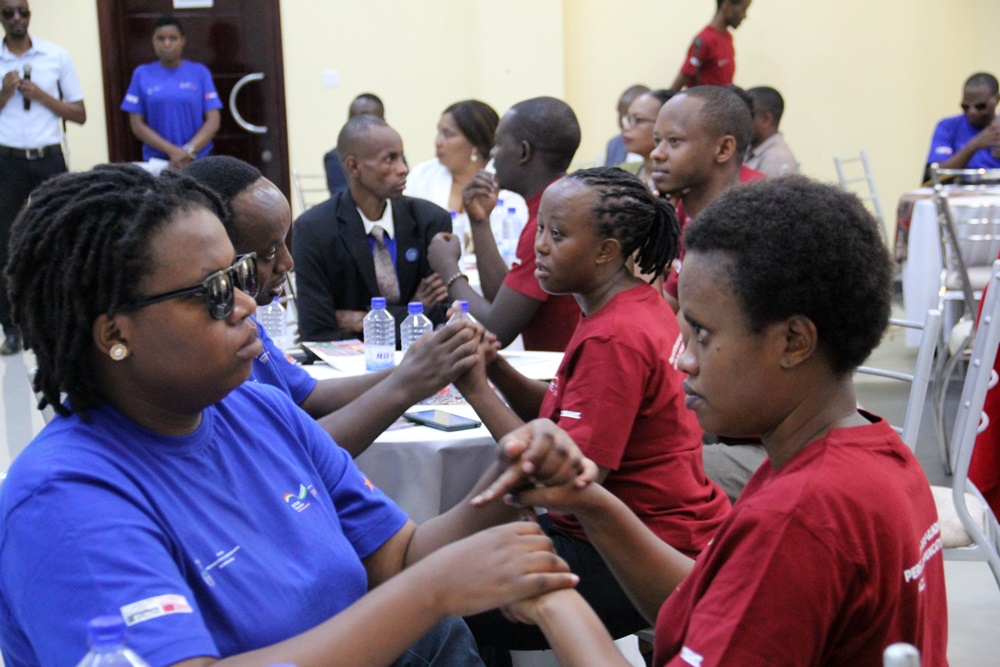
- After being involved in the Project of ROPDB supported by My Rights, she said that she got training on tactile sign language and how to communicate with the colleague, she was involved in ROPDB's activities, she met with different persons with and without Deaf-Blindness, invited in a different meeting organised by of organizations of Persons with Disabilities, she gave her interventions and contributes in different meetings, gained the knowledge on the rights of persons with Disabilities in Rwanda, got skills on mobility and orientation, during the meeting she attends they give her the transportation allowance the balance (remaining )of that allowance used to solve her issues like to buy the cosmetics lotion, satisfy herself with primary needs, live independently and be able to advocate herself on the existing issue.
- Yes, this change affects the community in general, services providers in different domains and persons with disabilities including persons with Deaf-Blindness. The health centre and Health services providers in the local started to be aware of Deaf-Blindness, even though they don't know tactile sign language they use interpreters to service me. The level of awareness of the community increase in the life of people with disabilities. For Persons with Deaf-Blindness, It helps me to tell them what they can do, Train them on what they don't know about their life. When I offer my testimony change the community and families of Persons with deaf-Blindness and Persons with deaf-Blindness.
- The Important change is that, because she is AIDs/HIV+, she got a briefing on how to take medicines regularly and if there are any issues she goes with a tactile sign language interpreter at the hospital, another important change is that she can communicate with the family members easily, able to share her life experience and life skills to other persons with Deaf-Blindness and increases awareness on the rights of persons with Deaf-Blindness on violence done by the community toward women with Deaf-Blindness.
- She said before getting involved in the project (ROPDB) supported by My Right she couldn't communicate with any person using tactile sign language, she always stayed at home, she didn't know the information from other persons with deaf-Blindness and in community, no update the news, she couldn't know the news on the government plan for them, even to communicate with her colleague was so difficult, her life was in darkness because she was not independent in her choice.
Our Partners