Capacity Building for Tactile Sign Language Interpreters
The Capacity Building for Tactile Sign Language Interpreters project aimed to enhance the professionalism and effectiveness of tactile sign language interpreters through targeted training, mentorship, and resource development. The project ran for 12 months in 2021 and was funded by the German Embassy. It was implemented by the Rwanda Organization of Persons with Deaf-Blindness (ROPDB).
Objectives
- Provide specialized training to tactile sign language interpreters to improve their skills and competencies.
- Establish a network of mentorship and support for tactile sign language interpreters.
- Develop and disseminate resources and best practices for tactile sign language interpretation.
Activities
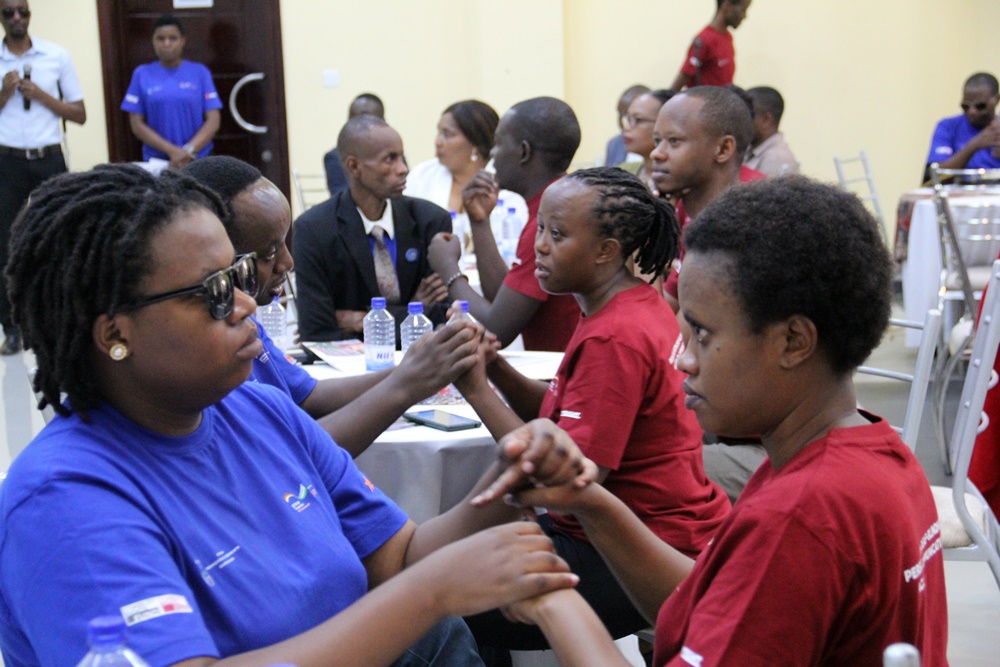
- Training Workshops: ROPDB provided training for more than 22 tactile sign language interpreters over five days, covering interpretation techniques, communication strategies, spatial awareness, vocabulary development, deaf-blind communication, ethics, professionalism, and cultural sensitivity in interpretation.
- Mentorship: The organization paired novice interpreters with experienced mentors to provide guidance, feedback, and support. Regular meetings and communication between mentors and mentees were facilitated, along with peer learning sessions and case studies to enhance skill development and problem-solving abilities.
- Resource Development: The organization created a comprehensive training manual and toolkit for tactile sign language interpreters including guidelines, exercises, and reference materials. Instructional videos and online resources on various aspects of tactile sign language interpretation were produced, and work began on developing a directory of qualified tactile sign language interpreters and referral networks for service providers.
Outcomes
- Enhanced Skills and Competencies: Participating interpreters reported improvements in their tactile signing skills, confidence, and ability to effectively communicate with deaf-blind individuals. Knowledge of ethical standards, cultural competence, and professional conduct among interpreters in Rwanda increased.
- Strengthened Network of Support: The mentorship program facilitated meaningful connections between interpreters and provided valuable guidance and encouragement. Participants appreciated the peer support and collaborative learning environment fostered by the project.
- Increased Accessibility of Services: The availability of trained and competent tactile sign language interpreters increased access to communication and information for deaf-blind individuals in educational, vocational, and social environments. Service providers and organizations benefited from improved interpretation services, leading to better inclusion and participation of deaf-blind individuals.
- Challenges Faced: Limited resources for training workshops, materials, and ongoing support. Recruitment of qualified mentors was challenging, especially in certain geographic areas. Ensuring sustainability of project outcomes and continued professional development beyond the project duration remains a concern.
The Capacity Building for Tactile Sign Language Interpreters project made significant strides in enhancing the professionalism and effectiveness of interpreters working with deaf-blind individuals. Through targeted training, mentorship, and resource development, the project contributed to improving access to communication for deaf-blind individuals and fostering greater inclusion and participation in society.
Our Partners